
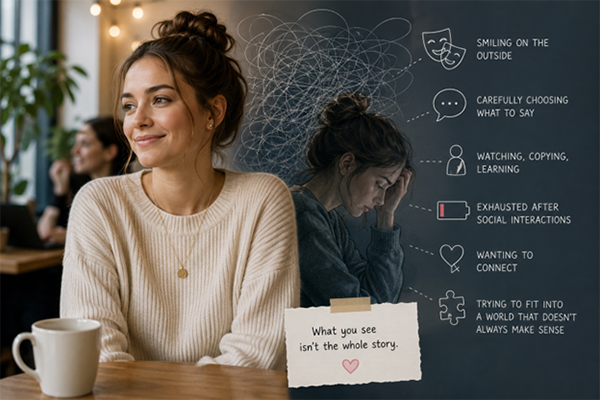
Autism is often associated with visible social challenges, but this does not always reflect how it presents in everyone. Many autistic women appear socially confident or “fine” on the surface, even while experiencing significant internal effort and stress.
If you or someone you know seems socially capable but feels exhausted, anxious, or overwhelmed afterward, it may be related to how autism presents differently, especially in women.
What Does “Socially Fine” Mean in Autism?
Being “socially fine” often refers to appearing comfortable in conversations, maintaining eye contact, or following social norms. In many autistic women, these behaviors are learned and practiced rather than automatic.
This outward presentation can sometimes mask the internal effort required to navigate social situations.
Common Signs Behind the Mask
1. Social Masking
Adapting behavior to fit in socially, often by copying others.
2. Rehearsing Conversations
Planning what to say in advance or replaying interactions afterward.
3. Emotional Exhaustion
Feeling drained after social interactions.
4. Heightened Self-Awareness
Constantly monitoring behavior to avoid mistakes.
5. Anxiety in Social Settings
Feeling stressed even when appearing calm.
6. Difficulty Being Authentic
Struggling to express true thoughts or preferences.
7. Burnout Over Time
Prolonged effort to maintain social expectations leading to fatigue.
Why Autistic Women May Appear Socially Comfortable
Several factors contribute to this pattern:
- Social Camouflaging
Learning to hide or compensate for differences in social communication. - Observation and Imitation
Carefully studying and mimicking social behavior. - Cultural Expectations
Social norms may encourage women to adapt more to social expectations. - Internal Processing Differences
Social interactions may require more conscious effort. - Desire to Fit In
Motivation to avoid feeling different or excluded.
How This Affects Daily Life
Masking social challenges can impact:
- Mental and emotional energy
- Anxiety and stress levels
- Sense of identity
- Relationships and communication
- Risk of burnout
Over time, individuals may feel misunderstood because their internal experience does not match how they appear externally.
When to Seek Help From a Specialist
Consider a professional evaluation if:
- Social interactions feel exhausting despite appearing comfortable
- You rely heavily on rehearsing or masking behavior
- You feel disconnected from your authentic self
- Anxiety or burnout is increasing
A specialist can help assess whether these experiences are related to autism and provide appropriate support.
Strategies and Support Options
Support often includes a combination of understanding and practical approaches:
- Reducing Masking When Safe
Allowing more authentic expression in comfortable environments. - Setting Social Boundaries
Limiting interactions to manageable levels. - Taking Recovery Time
Scheduling breaks after social situations. - Building Self-Awareness
Understanding personal needs and limits. - Therapy or Counseling
Supports identity, communication, and coping strategies. - Community Support
Connecting with others who share similar experiences.
With the right support, individuals can balance social expectations with their well-being.
About Dr. Priti Kothari
Dr. Priti Kothari is a board-certified child, adolescent, and adult psychiatrist providing comprehensive mental health care in Boca Raton. She specializes in ADHD, anxiety, depression, and stress-related conditions, offering comprehensive evaluations and personalized treatment plans for children, teens, and adults, including overlapping challenges related to neurodevelopmental conditions such as attention differences, social stress, and emotional regulation.
Dr. Kothari helps individuals better understand their experiences, reduce burnout, and build strategies that support both authenticity and well-being.
Frequently Asked Questions
Can autistic women appear socially confident?
Yes, many develop strong social skills through learning and adaptation.
What is social masking?
It is the process of hiding or adjusting behaviors to fit social expectations.
Is masking harmful?
Long-term masking can lead to stress, anxiety, and burnout.
Can this affect both teens and adults?
Yes, it can occur at any age.
Does support help reduce burnout?
Yes, the right strategies and support can improve well-being.