
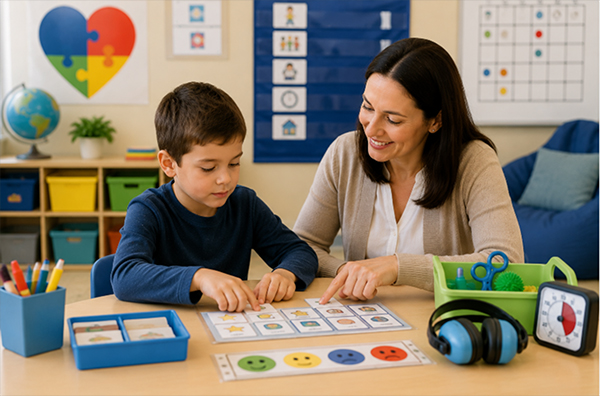
Children with autism often face unique challenges in traditional educational environments, including difficulties with communication, social interactions, attention, and executive functioning. Specialized classroom strategies can help students thrive academically, socially, and emotionally. Understanding these approaches is essential for parents, educators, and caregivers.
What Does This Mean?
Autism spectrum disorder presents differently in each child. Some may struggle with sensory sensitivities, others with social cues or staying on task. Classroom strategies tailored to these needs provide structure, support, and opportunities for growth. By implementing individualized approaches, educators can help students build confidence, independence, and functional skills.
Common Classroom Strategies
Structured Learning Environments
Using consistent routines, clear instructions, and visual schedules helps students predict daily activities and reduces anxiety.
Individualized Instruction
Tailoring lessons to a child’s strengths and needs allows for more effective learning and better engagement.
Visual Supports
Charts, icons, and color-coded materials can aid comprehension and reinforce tasks.
Positive Reinforcement
Providing immediate feedback and rewards encourages desired behaviors and motivates students to complete tasks.
Sensory Accommodations
Allowing movement breaks, quiet spaces, or adaptive seating helps students regulate attention and stress.
Collaborative Teaching Teams
Coordination between teachers, therapists, and support staff ensures consistency across academic, social, and behavioral interventions.
How This Affects Daily Learning
Applying these strategies can improve classroom engagement, reduce behavioral challenges, and enhance communication. Students may experience:
- Better focus and attention to tasks
- Improved social interactions with peers
- Greater independence in completing assignments
- Enhanced emotional regulation and coping skills
Strategies and Support Options
Teacher Training
Educators should receive ongoing training on evidence-based practices for autism support.
Family Involvement
Parents can reinforce strategies at home and provide insights into their child’s preferences and triggers.
Use of Technology
Educational apps, communication devices, and adaptive tools can support learning and independence.
Behavioral Interventions
Incorporating applied behavior analysis (ABA), social skills groups, or executive function coaching enhances skill development.
Regular Assessment
Frequent progress checks allow teachers to adjust interventions and ensure optimal support.
Implementing structured, individualized, and evidence-based strategies in the classroom empowers children with autism to succeed academically, socially, and emotionally. These interventions lay the foundation for long-term growth and quality of life.
About Dr. Priti Kothari
Dr. Priti Kothari is a board-certified child, adolescent, and adult psychiatrist in Boca Raton. She specializes in autism, ADHD, and pediatric mental health. Dr. Kothari works with families, educators, and schools to support children with autism using individualized strategies and evidence-based interventions.
Frequently Asked Questions
What is the most effective classroom strategy for students with autism?
Structured routines, visual supports, and individualized instruction have shown consistent success.
How can parents support these strategies at home?
Reinforce routines, provide visual cues, and maintain communication with educators.
Can technology help children with autism in school?
Yes, apps, communication devices, and adaptive tools can support learning and independence.
References