
Guidance from a Psychiatrist in Weston
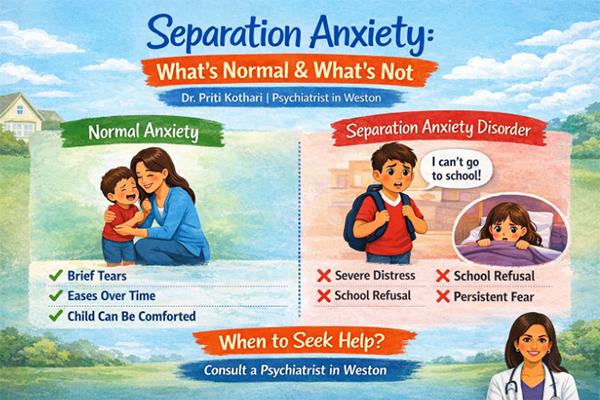
Separation anxiety is a common concern for many parents, especially during early childhood. Crying at daycare drop-off, clinging at bedtime, or distress when a caregiver leaves the room can feel overwhelming - but not all separation anxiety is a cause for concern.
Understanding what’s developmentally normal and what may signal a deeper issue is key to supporting your child’s emotional well-being. As a trusted psychiatrist in Weston, Dr. Priti Kothari helps families recognize when reassurance is enough and when professional support may be needed.
What Is Separation Anxiety?
Separation anxiety refers to distress a child experiences when separated from their primary caregiver. It is a normal part of emotional development and reflects a healthy attachment between child and parent.
However, when anxiety becomes excessive, persistent, or interferes with daily life, it may indicate Separation Anxiety Disorder, a diagnosable mental health condition.
What’s Normal: Age-Appropriate Separation Anxiety
Infants (6–12 months)
At this stage, babies begin to understand object permanence and may cry when a caregiver leaves. This is completely normal and often temporary.
Toddlers (1–3 years)
Toddlers may protest separations loudly, especially during transitions like starting daycare. Short-lived tantrums or clinginess are typical.
Preschoolers (3–5 years)
Children may express fear of being alone, have trouble with school drop-offs, or want reassurance at bedtime. These behaviors usually improve with consistency and routine.
Key sign of normal separation anxiety:
✔ Improves over time
✔ Child can be comforted
✔ Does not significantly disrupt daily functioning
What’s Not Normal: When to Be Concerned
Separation anxiety may be considered problematic when it:
- Persists beyond age 6–7
- Causes intense distress for weeks or months
- Leads to school refusal
- Triggers frequent physical complaints (stomachaches, headaches)
- Disrupts sleep consistently
- Involves extreme fear that something bad will happen to a caregiver
In such cases, consulting a psychiatrist in Weston can help determine whether your child is experiencing Separation Anxiety Disorder or another anxiety-related condition.
Separation Anxiety Disorder: Signs to Watch For
Children with Separation Anxiety Disorder may:
- Refuse to attend school or activities
- Panic during or before separation
- Have nightmares about separation
- Avoid being alone, even at home
- Experience significant emotional distress that does not improve with reassurance
Early identification and treatment are crucial to prevent long-term emotional and academic difficulties.
How Parents Can Support Their Child
1. Maintain Predictable Routines
Consistency helps children feel safe. Regular schedules for school, meals, and bedtime can reduce anxiety.
2. Practice Short Separations
Gradually increasing time apart builds confidence and coping skills.
3. Stay Calm and Reassuring
Children often mirror parental emotions. A calm goodbye communicates safety.
4. Avoid Sneaking Away
Sudden disappearances can increase fear and mistrust. Always say goodbye.
5. Validate Feelings Without Reinforcing Fear
Acknowledge emotions while reinforcing confidence:
“I know it’s hard, and I know you can handle it.”
When to Seek Professional Help
If separation anxiety is interfering with your child’s daily life, emotional health, or development, it may be time to consult a specialist. A board-certified psychiatrist in Weston can provide a thorough evaluation and recommend evidence-based treatment options such as:
- Cognitive Behavioral Therapy (CBT)
- Parent guidance and behavioral strategies
- Play therapy (for younger children)
- Medication (in select cases)
Early support can make a significant difference in long-term outcomes.
FAQs About Separation Anxiety
Is separation anxiety normal in school-age children?
Mild anxiety during transitions is normal, but persistent fear or school refusal is not and should be evaluated by a mental health professional.
Can separation anxiety appear suddenly?
Yes. Life changes such as moving, illness, loss, or family stress can trigger anxiety even in previously confident children.
Will my child outgrow separation anxiety?
Many children do, especially with reassurance and routine. However, persistent symptoms may require professional intervention.
How is separation anxiety diagnosed?
A psychiatrist evaluates symptoms, duration, developmental context, and impact on functioning through clinical interviews and standardized assessments.
Does separation anxiety affect teens?
Yes. In adolescents, it may appear as refusal to attend school, excessive worry about family members, or avoidance of independence.
About Dr. Priti Kothari – Psychiatrist in Weston
Dr. Priti Kothari is a board-certified child, adolescent, and adult psychiatrist with extensive experience treating anxiety disorders, including separation anxiety. She completed her fellowship training at Johns Hopkins Medical Center and sees patients from age 1 through adulthood.
Dr. Kothari is known for her compassionate, developmentally informed approach, working closely with families to create individualized treatment plans that support both the child and caregivers. As a trusted psychiatrist in Weston, she is dedicated to helping children build emotional resilience and confidence.
Final Thought
Separation anxiety is often a normal part of growing up - but knowing when it crosses the line into something more is essential. With the right guidance and support, children can learn to manage anxiety and thrive emotionally.
If you’re concerned about your child’s anxiety, consulting a qualified psychiatrist in Weston can provide clarity, reassurance, and effective care.
References
- Mayo Clinic – Separation Anxiety Disorder
Comprehensive overview of symptoms, what’s developmentally typical vs. disorder-level, and when to seek help.
Separation anxiety disorder – Mayo Clinic overview - WebMD – Separation Anxiety Disorder in Children
Explains signs, causes, and how separation anxiety differs from everyday anxiety in kids.
Separation anxiety disorder in children (WebMD) - Britannica – Separation Anxiety Disorder
Scientific description of the disorder with developmental context and risk factors.
Separation anxiety disorder explanation (Britannica) - MSD Manual – Quick Facts: Separation Anxiety Disorder
Clear medical reference on what is normal vs. abnormal anxiety and common symptoms.
Separation Anxiety Disorder quick facts (MSD Manual) - Children’s Hospital of Philadelphia (CHOP)
Defines separation anxiety disorder and how it differs from typical behavior in infants/toddlers.
Separation Anxiety Disorder – CHOP guide - JAMA Network – Diagnosis of SAD
Research-based criteria for diagnosing Separation Anxiety Disorder.
Separation anxiety disorder diagnosis (JAMA)