
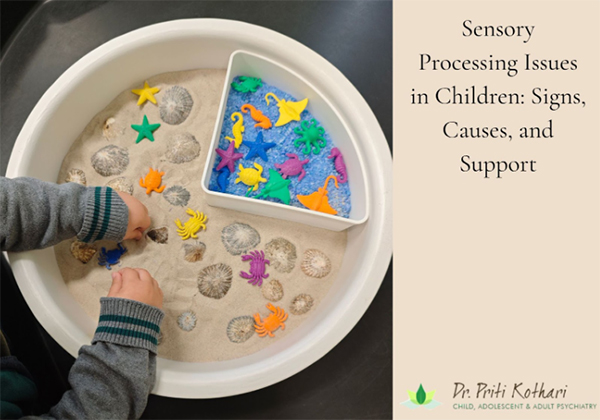
Children experience the world through their senses—sound, touch, movement, sight, taste, and smell. For some children, the brain has difficulty organizing and responding to this sensory information. These difficulties are known as sensory processing issues and can affect a child’s behavior, emotions, learning, and daily routines.
Understanding sensory processing issues early allows parents to seek appropriate support and improve a child’s ability to function comfortably at home, school, and in social settings.
What Are Sensory Processing Issues?
Sensory processing issues occur when the nervous system struggles to interpret and respond to sensory input. A child may be over-responsive, under-responsive, or show mixed responses to sensory stimuli.
For example, one child may feel overwhelmed by everyday sounds or clothing textures, while another may constantly seek movement or pressure. These responses are not behavioral choices; they reflect how the brain processes sensory information.
Sensory processing challenges can appear on their own or alongside other developmental, emotional, or behavioral concerns.
Common Signs of Sensory Processing Issues in Children
Signs can vary widely and may change as a child grows. Parents often notice difficulties in daily routines.
Sensory Sensitivities
- Covers ears in response to normal sounds
- Dislikes certain fabrics, tags, or textures
- Becomes distressed during grooming or haircuts
Sensory Seeking or Avoidance
- Constantly jumping, spinning, or crashing into objects
- Avoids playground equipment or messy play
- Seeks strong pressure, tight hugs, or movement
Emotional and Behavioral Signs
- Frequent meltdowns or emotional outbursts
- Difficulty transitioning between activities
- Trouble calming down after stimulation
When these challenges interfere with learning, relationships, or family life, professional evaluation can be helpful.
What Causes Sensory Processing Issues?
There is no single cause of sensory processing issues. Research suggests that differences in brain development and nervous system regulation play a role.
Sensory challenges may be associated with:
- Anxiety disorders
- Attention-deficit/hyperactivity disorder (ADHD)
- Autism spectrum conditions
- Mood or emotional regulation difficulties
A comprehensive evaluation helps determine whether sensory issues are part of a broader mental health or developmental concern.
How Sensory Processing Issues Affect Daily Life
Sensory challenges can influence many aspects of a child’s routine. At school, children may struggle with noise, sitting still, or focusing in busy classrooms. At home, mealtimes, bedtime routines, or outings can become stressful.
Socially, children with sensory sensitivities may avoid group activities or appear withdrawn, while sensory-seeking children may seem impulsive or disruptive. Without proper support, these experiences can affect self-esteem and emotional well-being.
When to See a Psychiatrist in Boca Raton
If sensory issues are affecting a child’s emotions, behavior, or functioning, consulting a psychiatrist in Boca Raton can provide clarity and guidance. A child and adolescent psychiatrist evaluates sensory challenges within the context of emotional health, development, and behavior.
Psychiatric evaluation is especially important when sensory difficulties occur alongside anxiety, mood changes, attention concerns, or significant behavioral distress.

Treatment and Support Options
Support for sensory processing issues often involves a collaborative approach.
Common Support Strategies
- Occupational therapy focused on sensory integration
- Behavioral strategies to improve regulation and transitions
- Parent guidance and routine adjustments
- Psychiatric evaluation for co-occurring conditions
- Medication management when appropriate for related symptoms
The goal is not to eliminate sensory differences but to help children manage responses and function more comfortably in daily life.
How Dr. Priti Kothari Supports Children and Families
Dr. Priti Kothari is a board-certified child and adolescent psychiatrist providing comprehensive mental health care in South Florida. As a trustedpsychiatrist in Boca Raton, Dr. Kothari takes a thoughtful, individualized approach to understanding sensory processing issues within the broader context of a child’s emotional and developmental needs.
Dr. Kothari works closely with families, therapists, and schools to develop treatment plans that support emotional regulation, behavior, and overall well-being. Her approach focuses on evidence-based care, collaboration, and long-term support for children and adolescents.
Supporting Your Child at Home
Parents play a key role in helping children manage sensory challenges.
Helpful strategies may include:
- Creating predictable daily routines
- Reducing sensory overload when possible
- Offering quiet spaces for regulation
- Using visual schedules or transitions
- Encouraging breaks during overstimulating activities
Small adjustments can make a meaningful difference in a child’s comfort and confidence.
Conclusion
Sensory processing issues can affect how children experience the world, but with early recognition and proper support, children can develop effective coping strategies. Understanding the signs, causes, and treatment options empowers families to seek the help their child needs.
Working with an experienced psychiatrist in Boca Raton ensures that sensory challenges are evaluated thoughtfully and addressed as part of a child’s overall mental health.
FAQs
Are sensory processing issues a diagnosis?
Sensory processing issues describe patterns of sensory difficulty rather than a standalone diagnosis. A psychiatrist evaluates whether they are part of a broader condition.
Can children outgrow sensory processing issues?
Some children improve over time, especially with support, while others benefit from ongoing strategies as they grow.
Should I see a psychiatrist or occupational therapist first?
Both can be helpful. A psychiatrist assesses emotional and behavioral factors, while occupational therapy focuses on sensory regulation skills.
When should I seek professional help?
If sensory challenges interfere with daily routines, learning, or emotional well-being, professional evaluation is recommended.
References:
- American Academy of Pediatrics (AAP)
Sensory integration and sensory processing challenges in children
Pediatrics Journal
https://publications.aap.org - Child Mind Institute
Sensory Processing Issues Explained
https://childmind.org/article/sensory-processing-issues-explained - National Institute of Mental Health (NIMH)
Child and Adolescent Mental Health Overview
https://www.nimh.nih.gov - CDC – Child Development
Developmental milestones and sensory regulation
https://www.cdc.gov/ncbddd/childdevelopment - American Psychiatric Association (APA)
Developmental and behavioral disorders in children
https://www.psychiatry.org - STAR Institute for Sensory Processing
Research-based insights on sensory processing challenges
https://www.spdstar.org