
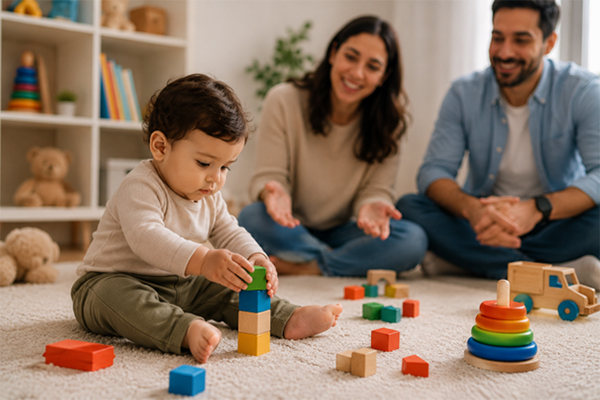
It can feel concerning when your baby seems to prefer playing alone rather than engaging with you or others. You might wonder if they are being distant or missing something important socially.
In many cases, this behavior can be part of normal development—but sometimes, it may signal differences in how a child interacts with their environment.
What Does This Mean?
Babies and toddlers often engage in independent play, which is a natural and important part of development. It helps them explore, learn, and build focus.
However, if a child consistently avoids interaction or shows limited interest in people, it may be helpful to look more closely at their social and communication development.
Common Signs
1. Prefers Solo Play
Spends most of the time playing alone.
2. Limited Interest in Others
Does not actively seek interaction with caregivers or peers.
3. Reduced Eye Contact
Makes less eye contact during play or communication.
4. Minimal Response to Social Cues
Does not respond consistently to smiles, gestures, or voices.
5. Focus on Objects Over People
Shows more interest in toys than in social interaction.
6. Limited Imitation
Does not copy sounds, expressions, or actions often.
7. Less Shared Enjoyment
Does not bring toys or share experiences with others.
Why This Happens
Several factors can contribute to this behavior:
- Normal Developmental Stage
Independent play is common, especially in younger babies. - Temperament
Some children are naturally more independent or observant. - Attention and Focus
Deep engagement in play can reduce social interaction. - Social Communication Development
Skills like eye contact and interaction are still developing. - Sensory Preferences
Some children prefer predictable, object-based play. - Early Signs of Autism
In some cases, reduced social engagement may be an early indicator.
How This Affects Daily Life
This behavior may impact:
- Bonding and interaction with caregivers
- Social skill development
- Communication growth
- Play and learning experiences
Parents may feel unsure whether to encourage more interaction or allow independence.
When to Seek Help From a Specialist
Consider a professional evaluation if:
- Your baby rarely engages with others
- Eye contact is limited
- There is little response to name or social cues
- Communication or language seems delayed
- You notice other developmental concerns
Early evaluation can help identify whether support is needed.
Strategies and Support Options
Support often focuses on gently encouraging interaction:
- Join Their Play
Engage with what they are already interested in. - Use Face-to-Face Interaction
Sit at their level to encourage connection. - Follow Their Lead
Let them guide the interaction. - Use Simple Sounds and Expressions
Make interactions engaging and responsive. - Encourage Turn-Taking
Build early social skills through play. - Limit Distractions
Create a calm environment for interaction. - Early Intervention Services
If developmental concerns are present.
With the right support, many children develop stronger social engagement over time.
About Dr. Priti Kothari
Dr. Priti Kothari is a board-certified child, adolescent, and adult psychiatrist providing comprehensive mental health care in Boca Raton. She specializes in ADHD, autism, anxiety, and developmental concerns, offering comprehensive evaluations and personalized treatment plans for children, teens, and adults.
Dr. Kothari helps parents understand early developmental behaviors, identify concerns, and support children in building social and communication skills.
Frequently Asked Questions
Is it normal for babies to play alone?
Yes, independent play is a normal part of development.
When should I be concerned?
If there is very limited interaction or social response.
Does this mean my child has autism?
Not always, but evaluation may be helpful if concerns persist.
Can social skills improve over time?
Yes, with support and development.
Should I force interaction?
No, gentle encouragement is more effective.