
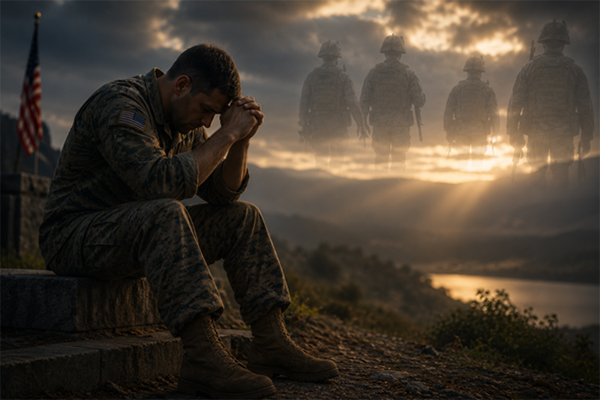
After experiencing combat or life-threatening situations, some veterans struggle with a deep and persistent sense of guilt for having survived when others did not. This experience, often called survivor's guilt, can be confusing and emotionally overwhelming.
If you or someone you know feels this way, it is important to understand that these feelings are a recognized response to trauma and not a reflection of personal fault.
What Is Survivor's Guilt?
Survivor's guilt is a form of emotional distress where individuals feel responsible for surviving a situation in which others were harmed or lost their lives.
Even when survival was beyond their control, thoughts like “Why them and not me?” or “I should have done more” can persist.
Common Signs of Survivor's Guilt
1. Persistent Guilt
Feeling undeserving of survival.
2. Replaying Events
Thinking repeatedly about what could have been done differently.
3. Self-Blame
Believing one should have prevented the outcome.
4. Emotional Distress
Experiencing sadness, anxiety, or shame.
5. Withdrawal
Pulling away from others or avoiding reminders.
6. Difficulty Feeling Joy
Struggling to enjoy life after the event.
7. Intrusive Thoughts
Unwanted memories or thoughts about the event.
Why This Happens
Several psychological factors contribute to survivor's guilt:
- Sense of Responsibility
Feeling accountable for others' safety. - Strong Bonds With Others
Loss of close companions can intensify guilt. - Need for Meaning
The mind tries to make sense of why survival occurred. - Cognitive Distortions
Beliefs that one could have changed the outcome. - Moral Injury
Conflict between actions, values, and outcomes during trauma. - Trauma Processing
The brain struggles to fully process extreme experiences.
How This Affects Daily Life
Survivor's guilt can impact:
- Emotional well-being
- Relationships
- Self-esteem
- Ability to move forward
- Overall quality of life
It can keep individuals feeling “stuck” in the past.
When to Seek Help From a Specialist
Consider professional support if:
- Guilt is persistent or overwhelming
- It affects daily functioning
- There is withdrawal or isolation
- Symptoms of PTSD are present
A specialist can help process these experiences safely and support recovery.
Strategies and Support Options
Support often focuses on processing trauma and reducing self-blame:
- Trauma-Focused Therapy
Helps process experiences and reduce distress. - Cognitive Behavioral Therapy (CBT)
Challenges unhelpful thoughts and beliefs. - Addressing Moral Injury
Working through values, responsibility, and meaning. - Peer Support Groups
Connecting with others who have similar experiences. - Building Self-Compassion
Learning to treat oneself with understanding. - Gradual Re-engagement With Life
Finding purpose and meaning moving forward.
With the right support, individuals can begin to reduce guilt and rebuild a sense of peace.
About Dr. Priti Kothari
Dr. Priti Kothari is a board-certified child, adolescent, and adult psychiatrist providing comprehensive mental health care in Boca Raton. She specializes in ADHD, anxiety, depression, PTSD, and stress-related conditions, offering comprehensive evaluations and personalized treatment plans for children, teens, and adults.
Dr. Kothari helps individuals process trauma, reduce guilt and emotional distress, and develop strategies for healing and long-term well-being.
Frequently Asked Questions
Is survivor's guilt common among veterans?
Yes, it is a well-recognized response to traumatic experiences.
Why do people feel guilty for surviving?
It is often the brain's way of trying to make sense of loss and survival.
Can this happen outside of combat situations?
Yes, survivor's guilt can occur in any life-threatening situation.
Can survivor's guilt improve over time?
Yes, with proper support and treatment.
Does therapy help with survivor's guilt?
Many individuals benefit from trauma-focused therapies.