
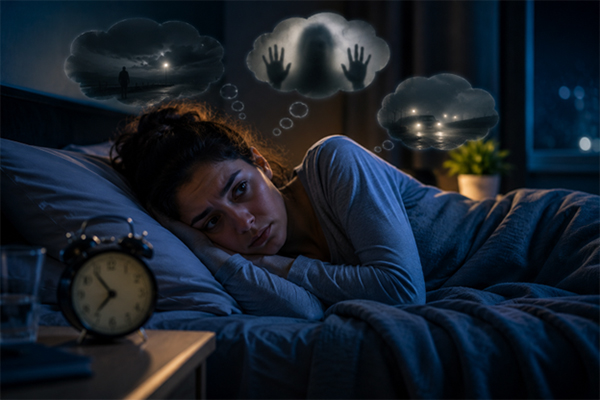
Sleep is essential for physical and mental well-being, yet many individuals with PTSD struggle to fall asleep or stay asleep through the night. This can be frustrating and exhausting, especially when rest is needed the most.
If you or someone you know has difficulty sleeping despite feeling tired, it may be related to how PTSD affects the brain and body.
What Does This Mean?
In PTSD, sleep difficulties are often linked to a heightened state of alertness. Even when the environment is safe, the brain may continue to stay on guard, making it hard to relax enough to fall asleep.
This can lead to difficulty falling asleep, frequent awakenings, or restless, unrefreshing sleep.
Common Signs of Sleep Difficulties in PTSD
1. Trouble Falling Asleep
Lying awake for long periods before sleeping.
2. Frequent Night Awakenings
Waking up multiple times during the night.
3. Nightmares
Distressing dreams related or unrelated to trauma.
4. Restless Sleep
Feeling tired even after a full night in bed.
5. Fear of Sleeping
Avoiding sleep due to nightmares or discomfort.
6. Early Morning Awakening
Waking up earlier than intended and unable to return to sleep.
7. Daytime Fatigue
Feeling exhausted or low energy during the day.
Why This Happens
Several underlying factors contribute to sleep problems in PTSD:
- Hypervigilance
The brain remains alert for potential danger, even during rest. - Overactive Stress Response
The body stays in “fight or flight” mode. - Nightmares and Intrusive Memories
Disturb sleep and create fear around sleeping. - Difficulty Relaxing
The nervous system struggles to shift into a restful state. - Increased Anxiety at Night
Quiet environments may make thoughts feel more intense. - Disrupted Sleep Cycles
Irregular sleep patterns affect sleep quality.
How This Affects Daily Life
Sleep difficulties can impact:
- Energy and concentration
- Mood and emotional regulation
- Work or school performance
- Physical health
- Overall quality of life
Lack of sleep can also worsen other PTSD symptoms.
When to Seek Help From a Specialist
Consider professional support if:
- Sleep problems are persistent
- Nightmares occur frequently
- Fatigue affects daily functioning
- There is anxiety or fear around sleep
A specialist can help identify causes and provide effective treatment options.
Strategies and Support Options
Support often focuses on improving sleep and reducing stress:
- Creating a Consistent Sleep Routine
Going to bed and waking up at the same time daily. - Relaxation Techniques Before Bed
Breathing exercises, meditation, or calming activities. - Limiting Stimulation at Night
Reducing screen time and noise. - Therapy (Trauma-Focused)
Helps process trauma and reduce symptoms. - Managing Nightmares
Techniques like imagery rehearsal therapy. - Creating a Safe Sleep Environment
Making the bedroom feel calm and secure.
With the right support, sleep can gradually improve and become more restorative.
About Dr. Priti Kothari
Dr. Priti Kothari is a board-certified child, adolescent, and adult psychiatrist providing comprehensive mental health care in Boca Raton. She specializes in ADHD, anxiety, depression, PTSD, and stress-related conditions, offering comprehensive evaluations and personalized treatment plans for children, teens, and adults.
Dr. Kothari helps individuals understand the connection between trauma and sleep, and supports them in developing strategies to improve rest and overall well-being.
Frequently Asked Questions
Is insomnia common in PTSD?
Yes, sleep difficulties are a common symptom of PTSD.
Why do nightmares happen in PTSD?
They are linked to how the brain processes and re-experiences trauma.
Can children and adults both experience this?
Yes, PTSD-related sleep issues can occur at any age.
Can sleep improve over time?
Yes, with appropriate treatment and support.
Does therapy help with sleep problems in PTSD?
Yes, many individuals benefit from trauma-focused therapies and sleep interventions.