
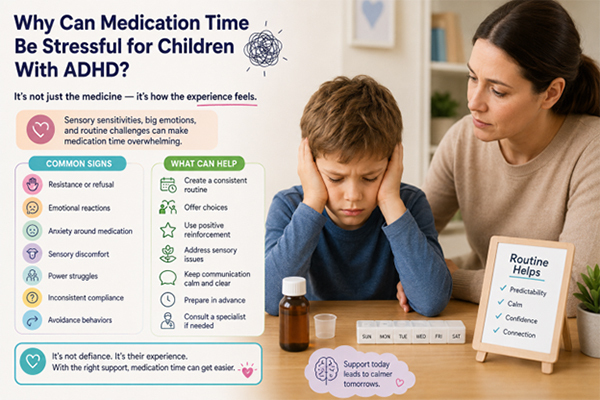
Medication can be an important part of managing ADHD, but for many children, medication time itself can become stressful. Parents may notice resistance, anxiety, or emotional reactions around this daily routine.
If your child struggles during medication time, it’s important to understand that this response is often linked to how ADHD affects emotions, behavior, and sensory experiences—not simply defiance.
What Does This Mean?
For children with ADHD, medication time can feel overwhelming due to a mix of sensory sensitivities, emotional responses, and routine challenges.
Even small daily tasks can become stressful when they involve discomfort, unpredictability, or pressure.
Common Signs
1. Resistance or Refusal
Avoiding or delaying medication time.
2. Emotional Reactions
Crying, frustration, or irritability.
3. Anxiety Around Medication
Worry before or during the process.
4. Sensory Discomfort
Disliking taste, texture, or swallowing.
5. Power Struggles
Conflicts between parent and child.
6. Inconsistent Compliance
Taking medication some days but not others.
7. Avoidance Behaviors
Distraction, negotiation, or delay tactics.
Why This Happens
Several underlying factors contribute to stress around medication:
- Sensory Sensitivities
Taste, texture, or swallowing pills may feel uncomfortable. - Need for Control
Children with ADHD may resist situations where they feel forced. - Emotional Regulation Challenges
Strong reactions to routine demands. - Previous Negative Experiences
Past discomfort can create ongoing resistance. - Difficulty With Transitions
Shifting from one activity to another can be hard. - Lack of Predictability
Inconsistent routines increase stress.
How This Affects Daily Life
Medication-related stress can impact:
- Morning or daily routines
- Parent-child relationships
- Consistency of treatment
- Emotional well-being
- Overall family dynamics
It can turn a simple task into a repeated source of tension.
When to Seek Help From a Specialist
Consider professional support if:
- Medication refusal is frequent
- Stress significantly disrupts routines
- There are strong emotional reactions
- Medication adherence becomes inconsistent
A specialist can help adjust both the medication plan and the approach.
Strategies and Support Options
Support often focuses on making the process easier and more predictable:
- Create a Consistent Routine
Same time, same approach each day. - Offer Choices
Giving small options increases a sense of control. - Use Positive Reinforcement
Encouragement instead of pressure. - Address Sensory Issues
Explore different medication forms if needed. - Keep Communication Calm and Clear
Avoid power struggles. - Prepare in Advance
Let the child know what to expect. - Consult a Specialist
Adjust medication type or delivery method if needed.
With the right approach, medication time can become smoother and less stressful.
About Dr. Priti Kothari
Dr. Priti Kothari is a board-certified child, adolescent, and adult psychiatrist providing comprehensive mental health care in Boca Raton. She specializes in ADHD, anxiety, depression, and developmental concerns, offering comprehensive evaluations and personalized treatment plans for children, teens, and adults.
Dr. Kothari helps families navigate ADHD treatment challenges, including medication routines, and supports children in building positive and manageable daily habits.
Frequently Asked Questions
Is it normal for children to resist medication?
Yes, especially if there are sensory or emotional challenges.
Does this mean the medication isn’t working?
Not necessarily—it may be about the process, not the medication itself.
Can medication time become easier?
Yes, with consistency and supportive strategies.
Are there alternatives to tablets?
Yes, including liquid, chewable, or other formulations.
Should I force my child to take medication?
A supportive, structured approach is more effective than force.