
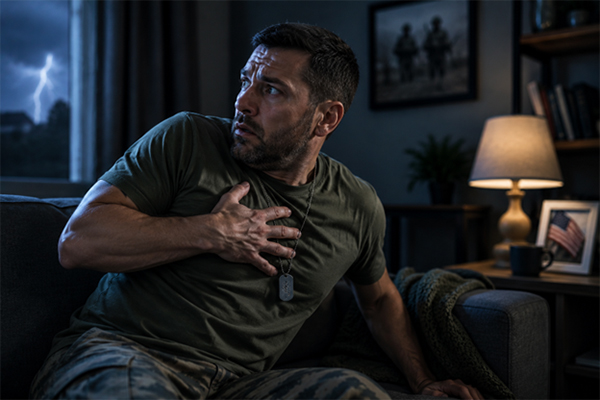
For many veterans, sudden loud sounds—like fireworks, traffic noise, or a door slamming—can still trigger a strong startle response, even years after returning to civilian life.
This reaction can feel confusing, especially when there is no real danger present. However, it is a well-understood response linked to how the brain and body adapt to trauma.
What Does This Mean?
After exposure to combat or life-threatening situations, the brain becomes highly attuned to detecting potential danger. Loud or sudden sounds can be interpreted as threats, even in safe environments.
This is part of the body’s natural survival response, which may remain active long after the original experience.
Common Signs of Heightened Startle Response
1. Jumping at Sudden Noises
Reacting strongly to unexpected sounds.
2. Feeling On Edge
Constant sense of alertness in the environment.
3. Increased Heart Rate
Physical reactions like a racing heart or sweating.
4. Avoidance of Loud Environments
Staying away from crowded or noisy places.
5. Difficulty Relaxing
Struggling to feel calm even in safe settings.
6. Emotional Reactions
Feelings of fear, anxiety, or irritability.
7. Quick Defensive Responses
Instinctive reactions before conscious thought.
Why This Happens
Several underlying factors contribute to this response:
- Hypervigilance
The brain remains alert for potential threats. - Conditioned Responses
Loud sounds were previously associated with danger. - Overactive Amygdala
The brain’s fear center becomes more sensitive. - Nervous System Activation
The body quickly shifts into "fight or flight." - Trauma Memory Processing
The brain continues to respond as if the threat is present. - Delayed Reset of Safety Signals
The brain takes longer to recognize that the environment is safe.
How This Affects Daily Life
This heightened response can impact:
- Comfort in public spaces
- Social interactions
- Ability to relax
- Sleep and rest
- Overall sense of safety
Even everyday environments can feel unpredictable or stressful.
When to Seek Help From a Specialist
Consider professional support if:
- Startle responses are frequent or intense
- Loud sounds cause distress or avoidance
- It affects daily functioning
- There are additional PTSD symptoms
A specialist can help reduce sensitivity and improve coping strategies.
Strategies and Support Options
Support often focuses on calming the nervous system and retraining responses:
- Grounding Techniques
Helps bring attention back to the present moment. - Gradual Exposure
Slowly increasing tolerance to triggering sounds. - Therapy (Trauma-Focused)
Helps process and reduce trauma responses. - Relaxation Techniques
Breathing exercises and mindfulness practices. - Creating Predictable Environments
Reduces unexpected triggers. - Using Protective Tools
Earplugs or noise-reducing headphones when needed.
With the right support, the intensity of these reactions can decrease over time.
About Dr. Priti Kothari
Dr. Priti Kothari is a board-certified child, adolescent, and adult psychiatrist providing comprehensive mental health care in Boca Raton. She specializes in ADHD, anxiety, depression, PTSD, and stress-related conditions, offering comprehensive evaluations and personalized treatment plans for children, teens, and adults.
Dr. Kothari helps individuals understand trauma responses, reduce heightened alertness, and build strategies for feeling safer and more in control.
Frequently Asked Questions
Is it normal to be startled by loud sounds after trauma?
Yes, it is a common response linked to PTSD.
Why does this happen years later?
Because the brain may continue to stay alert for potential danger.
Can this improve over time?
Yes, with therapy and supportive strategies.
Do all veterans experience this?
Not all, but many may experience some level of heightened sensitivity.
Does treatment help reduce these reactions?
Yes, many individuals benefit from trauma-focused therapies.